Basic Ruminant Nutrition
Unlike pigs or poultry, ruminants have a unique digestive system that allows them to convert grass, hay, and other fibrous plants into high-quality protein for human consumption. This remarkable ability enables producers to utilize land that cannot be used for crop production while producing nutritious food.
Whether you raise beef cattle, dairy cattle, sheep, goats, bison, deer, or other ruminants, the basic nutritional principles remain very similar.
What is a Ruminant?
A ruminant is an animal with a specialized four-compartment stomach designed to digest fibrous plants through microbial fermentation. Instead of relying only on digestive enzymes, ruminants depend on billions of beneficial microorganisms that break down plant fibre into usable nutrients.
Common Ruminant Livestock
- Beef cattle
- Dairy cattle
- Sheep
- Goats
- Bison
- Elk
- Deer
- Llamas and alpacas (modified ruminants)
The Four Compartments of the Ruminant Stomach
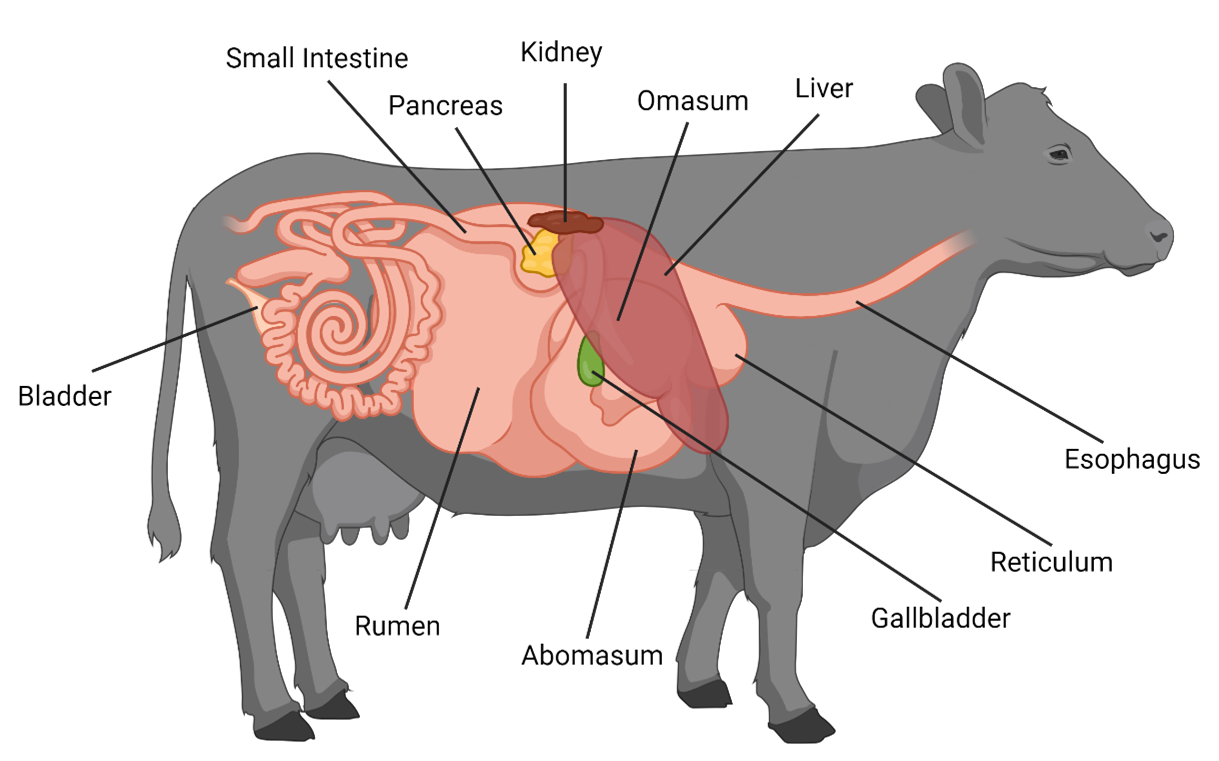
The ruminant stomach consists of four compartments that work together to digest feed efficiently.
| Compartment | Main Function |
|---|---|
| Rumen | The largest compartment where microbes ferment fibre and produce nutrients. |
| Reticulum | Works with the rumen during rumination and traps foreign objects. |
| Omasum | Absorbs water and minerals while reducing particle size. |
| Abomasum | The "true stomach" where digestive enzymes break down feed and microbes. |
What is Rumination?
Ruminants often appear to be chewing long after they have finished eating. This process is called rumination or "chewing the cud."
During rumination, partially digested feed is brought back into the mouth, chewed again into smaller particles, mixed with saliva, and swallowed for further digestion.
Benefits of Rumination
- Improves digestion of forage.
- Increases saliva production, helping maintain rumen pH.
- Allows microbes to digest fibre more efficiently.
- Improves nutrient utilization.
The Importance of Forage
Forages form the foundation of most ruminant diets. Good-quality forage supports healthy rumen function and provides much of the energy and protein animals require.
Examples of Forages
- Pasture grasses
- Legumes such as alfalfa and clover
- Hay
- Silage
- Green chop
- Crop residues
Young, leafy forage generally contains more nutrients than mature, stemmy forage. Harvest timing and storage conditions also affect forage quality.
The Six Essential Nutrients
Like all animals, ruminants require six major nutrient groups to maintain health and production.
Macronutrients
- Water
- Energy
- Protein
Micronutrients
- Minerals
- Vitamins
- Fibre
Water: The Most Important Nutrient
Although producers often focus on feed, water is actually the most important nutrient. Animals can survive much longer without feed than without clean drinking water.
Good Water Management
- Provide clean water at all times.
- Check waterers daily.
- Prevent freezing during winter.
- Ensure adequate water flow during hot weather.
- Keep troughs clean.
Energy
Energy fuels every body function including maintenance, growth, reproduction, milk production, movement, and immune function.
Major energy sources include:
- High-quality forage
- Grains (corn, barley, oats, wheat)
- Silage
- By-product feeds
Protein
Protein supports muscle development, growth, reproduction, immune function, and milk production.
Common Protein Sources
- Alfalfa hay
- Clover
- Canola meal
- Soybean meal
- Distillers grains
- Commercial protein supplements
One advantage of ruminants is that rumen microbes can convert some forms of nitrogen into high-quality microbial protein, reducing dependence on expensive protein feeds.
Minerals and Vitamins
Minerals and vitamins are required in smaller amounts but are essential for health, fertility, bone development, immunity, and growth.
Important Minerals
- Calcium
- Phosphorus
- Magnesium
- Sodium
- Copper*
- Zinc
- Selenium
Important Vitamins
- Vitamin A
- Vitamin D
- Vitamin E
*Copper requirements differ greatly between species. Sheep are particularly sensitive to excess copper, so mineral supplements should always be species-specific.
Feeding Animals at Different Stages
Nutritional requirements change throughout an animal's life.
| Stage | Nutritional Priority |
|---|---|
| Young animals | Rapid growth and development |
| Breeding animals | Reproductive performance |
| Pregnant females | Foetal growth and body condition |
| Lactating animals | Milk production |
| Finishing animals | Efficient weight gain |
Signs of Good Nutrition
- Bright, alert animals.
- Good appetite.
- Healthy body condition.
- Glossy coat or fleece.
- Good reproductive performance.
- Strong growth rates.
- Healthy manure consistency.
- Normal rumination behaviour.
Common Feeding Mistakes
- Suddenly changing diets.
- Feeding poor-quality or mouldy hay.
- Ignoring water quality.
- Using the wrong mineral supplement.
- Underfeeding during pregnancy or lactation.
- Overfeeding grain.
- Not testing forage quality.
- Allowing feed wastage.
Practical Tips for Producers
- Base your feeding program on good-quality forage.
- Provide clean water every day.
- Offer free-choice mineral supplements appropriate for your species.
- Introduce feed changes gradually over 7–14 days.
- Monitor body condition regularly.
- Work with a nutritionist or veterinarian when developing feeding programs for high-producing animals.
- Test hay and silage whenever possible to accurately balance rations.
Producer Checklist
- ✔ I understand how the rumen functions.
- ✔ My animals always have access to clean water.
- ✔ My feeding program is based on quality forage.
- ✔ I provide appropriate mineral supplements.
- ✔ I avoid sudden feed changes.
- ✔ I regularly evaluate body condition.
- ✔ I monitor feed quality and storage.