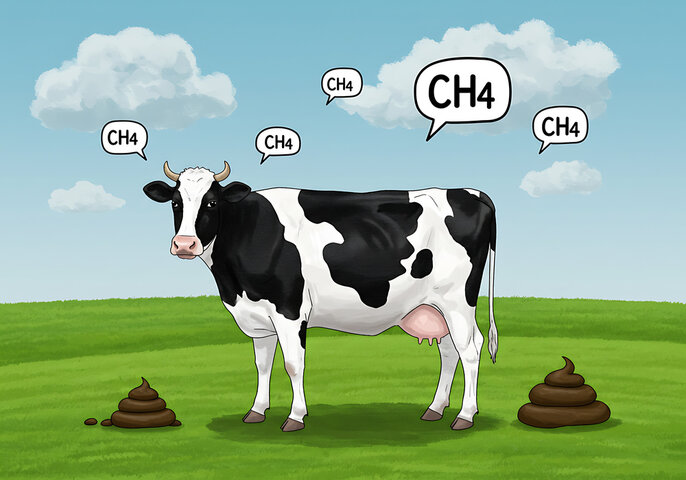
As agriculture continues to adapt to changing environmental expectations, reducing methane emissions from cattle has become an important topic for producers around the world. Methane is a natural by-product of digestion in ruminant animals such as cattle, sheep, and goats. It is also produced when manure decomposes under certain conditions.
While methane is a potent greenhouse gas, it also represents lost feed energy. Every litre of methane released by an animal is energy that could otherwise have contributed to growth, milk production, or reproduction. The encouraging news is that many practices that reduce methane emissions also improve herd performance and farm profitability.
Here are five practical, science-based strategies that producers can begin implementing on their farms.
1. Improve Feed Quality
One of the simplest ways to reduce methane production is to improve the quality of the feed your cattle consume. High-quality feeds are more digestible, allowing animals to obtain more nutrients from every mouthful while producing less methane per kilogram of feed eaten.
- Harvest hay at the proper stage of maturity.
- Maintain productive, healthy pastures.
- Include high-quality legumes such as alfalfa where appropriate.
- Balance rations to meet, but not greatly exceed, nutrient requirements.
- Test forages regularly so rations can be adjusted based on actual feed quality.
Improving feed quality not only reduces methane emissions but often leads to better weight gains, improved feed efficiency, and higher milk production.
Producer Tip: Investing in better forage management is often one of the most cost-effective ways to improve both productivity and environmental performance.
2. Consider Feed Additives
Researchers continue to develop feed additives that can reduce methane production in the rumen. While not every additive is suitable for every operation, several have shown promising results under commercial conditions.
Examples include:
- Certain fats and vegetable oils
- Tannin-containing plants
- Essential oils
- Nitrate-based supplements
- Specific seaweed species (such as Asparagopsis) that have demonstrated significant methane reductions in research trials
Some additives work by altering the microbes responsible for methane production, while others improve the efficiency of rumen fermentation.
Before introducing any supplement, consult your veterinarian or livestock nutritionist to ensure it is appropriate for your production system and nutritional program.
3. Improve Herd Health and Overall Efficiency
Perhaps the most overlooked way to reduce methane emissions is simply to produce more with fewer resources.
Healthy, productive cattle convert feed into meat or milk more efficiently than animals that are sick, stressed, or growing slowly. As a result, methane emissions per kilogram of product are reduced.
Focus on:
- Maintaining an effective vaccination program
- Controlling internal and external parasites
- Providing adequate minerals and clean water
- Reducing stress during handling and transportation
- Detecting illness early
- Improving reproductive performance
- Reducing calf mortality
- Helping calves get off to a strong start through good colostrum management and nutrition
When cattle remain healthy and productive, fewer replacement animals are needed, and the overall environmental footprint of the operation decreases.
Producer Tip: Good herd health is one of the best investments you can make, improving animal welfare and profitability and reducing emissions.
4. Improve Manure Management
Methane is produced when manure decomposes without oxygen, particularly in liquid manure storage systems.
Although every farm is different, there are several practical ways to reduce emissions from manure.
These include:
- Avoiding unnecessarily long storage periods
- Covering manure storage where practical
- Applying manure at the appropriate time to maximize nutrient use
- Incorporating manure into the soil when suitable
- Keeping manure storage systems well maintained
For larger operations, anaerobic digesters may be worth considering. These systems capture methane produced from manure and convert it into renewable energy, reducing emissions while generating electricity or heat.
Good manure management also improves nutrient recycling, reduces fertilizer costs, and helps protect water quality.
5. Manage Pastures for Healthier Cattle and Healthier Soils
Well-managed pastures provide benefits that extend beyond animal nutrition. Healthy pastures support productive livestock while helping store carbon in the soil.
Rotational grazing is one of the most effective pasture management strategies. By allowing plants adequate recovery time, producers can improve forage production, maintain pasture health, and support better animal performance.
Other useful practices include:
- Maintaining adequate pasture cover
- Preventing overgrazing
- Introducing legumes to improve forage quality and naturally supply nitrogen
- Improving watering systems to encourage even grazing
- Planting trees or shrubs where appropriate through silvopasture systems
Healthy pastures often lead to healthier cattle, improved feed utilization, and greater resilience during dry conditions.
Producer Tip: Productive pastures are one of the most valuable assets on any livestock farm. Investing in pasture management often pays dividends for many years.

Final Thoughts
Reducing methane emissions does not necessarily require expensive technology or major changes to your operation. In many cases, the same practices that improve animal health, feed efficiency, and pasture productivity also reduce emissions.
Rather than viewing methane reduction as an environmental obligation, producers can think of it as another way to improve overall farm efficiency. Better nutrition, healthier cattle, sound pasture management, and effective manure handling all contribute to a more productive and sustainable livestock operation.
Every farm is different, so start with the practices that best fit your production system. Even small improvements, when applied consistently, can make a meaningful difference over time.
Producer Takeaway
- Feed high-quality, digestible forages whenever possible.
- Keep cattle healthy through preventive herd health programs.
- Work with a nutritionist before using methane-reducing feed additives.
- Manage manure to minimize methane losses and maximize nutrient value.
- Invest in productive pastures through rotational grazing and good forage management.
Remember: Reducing methane does not just lower emissions, it makes better use of the feed, animals, and resources you already have. Efficient cattle are typically more productive cattle, making methane reduction a win for both the environment and the farm business.